Call for Applications: Asian Australian Voices – Closing Soon!
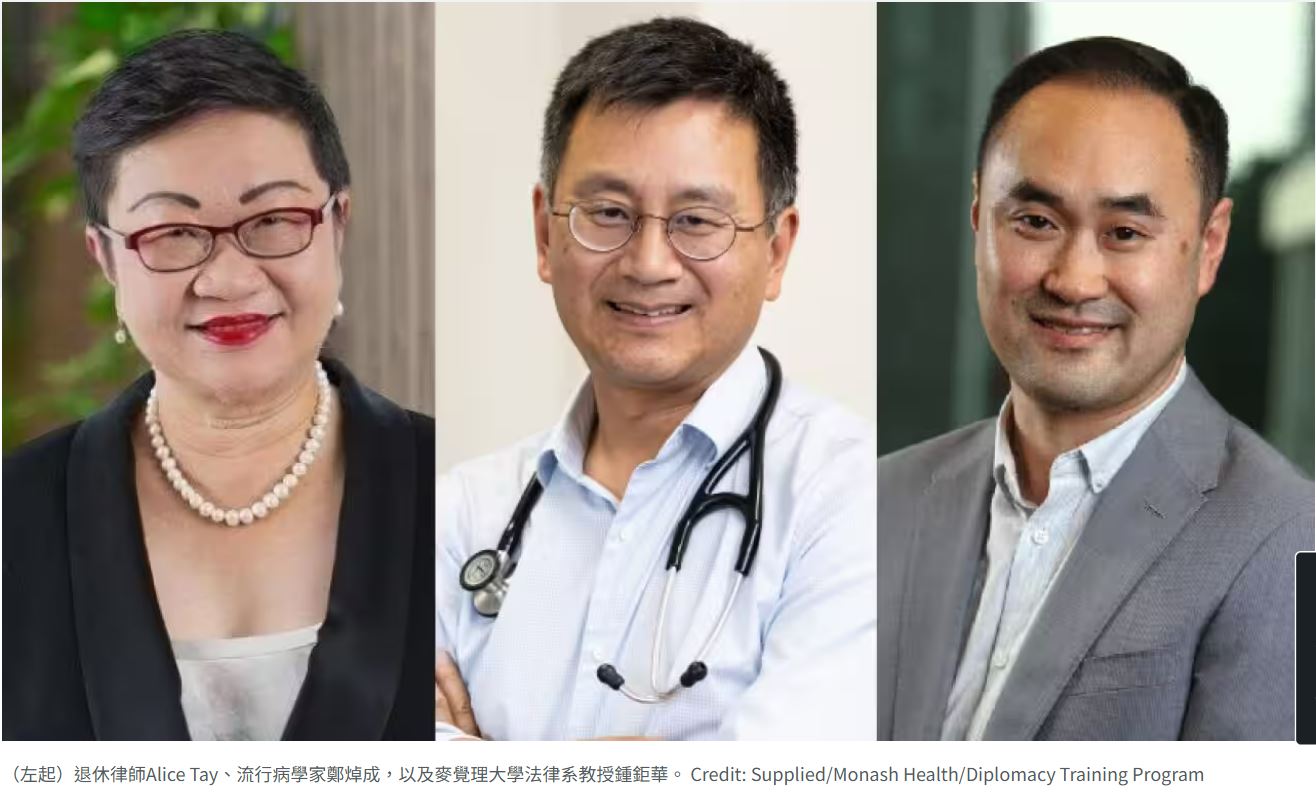
The Asian Australian Voices program, to be delivered by Asia Society Australia, will select 21 Asian Australian professionals from diverse fields to participate in 12 months of intensive media and public policy training, equipping them to better project their insights and expertise on Australia’s relations with the region.
Civics Education Workshop Empowers Chinese Australians on Democracy and Media Literacy
公民教育讲座助力澳洲华人提升民主意识与媒体素养
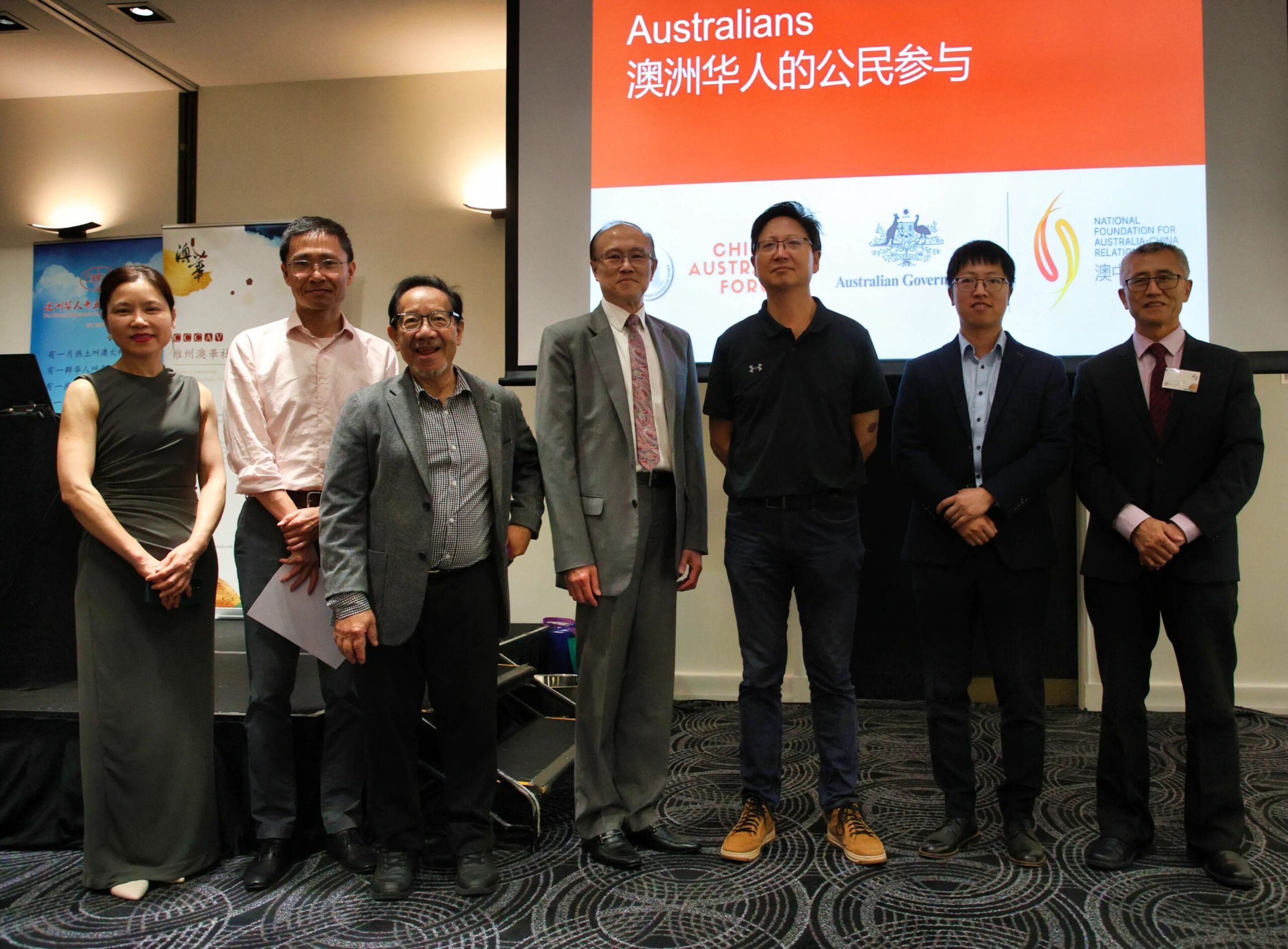
On a hot summer Saturday afternoon, 22 February 2025, the Chinese Community Council of Australia, Victoria Chapter (CCCAV), and the Chinese Professionals Club of Australia (CPCA) successfully hosted a Civics Education Workshop at the Novotel Glen Waverley. The event attracted approximately 120 attendees and focused on key aspects of the Australian democratic process, civic participation, and media literacy—particularly the ability to critically evaluate information, identify misinformation and disinformation, and develop fact-checking skills.
Dr. Eric Fu, Senior Research Fellow at the University of Melbourne, led the workshop, offering his expertise in Civics and Citizenship Education. His presentation was widely praised for its clarity and depth, providing attendees with valuable insights into democratic engagement.
The event commenced with a warm welcome from MC Lisha Dittberner, who acknowledged the traditional owners of the land, recognized the support of the Chinese Australian Forum (CAF) and the National Foundation for Australia-China Relations, and outlined the workshop’s program.
Opening speeches were delivered by Tony Pang OAM, Vice President of CAF; Qi Chen, President of CPCA; and Jimmy Li, President of CCCAV. Tony Pang emphasized CAF’s mission to foster a socially cohesive society and combat racism, while Qi Chen underscored the importance of unity among Chinese Australians. Jimmy Li highlighted the community’s contributions to Australia and stressed that understanding democratic principles is both a right and a responsibility of citizenship.
The workshop received highly positive feedback, with attendees commending the informative and engaging content. Dr. Fu’s session, in particular, was recognized for its insightful approach to explaining Australia’s democratic process and the role of media literacy in civic engagement.
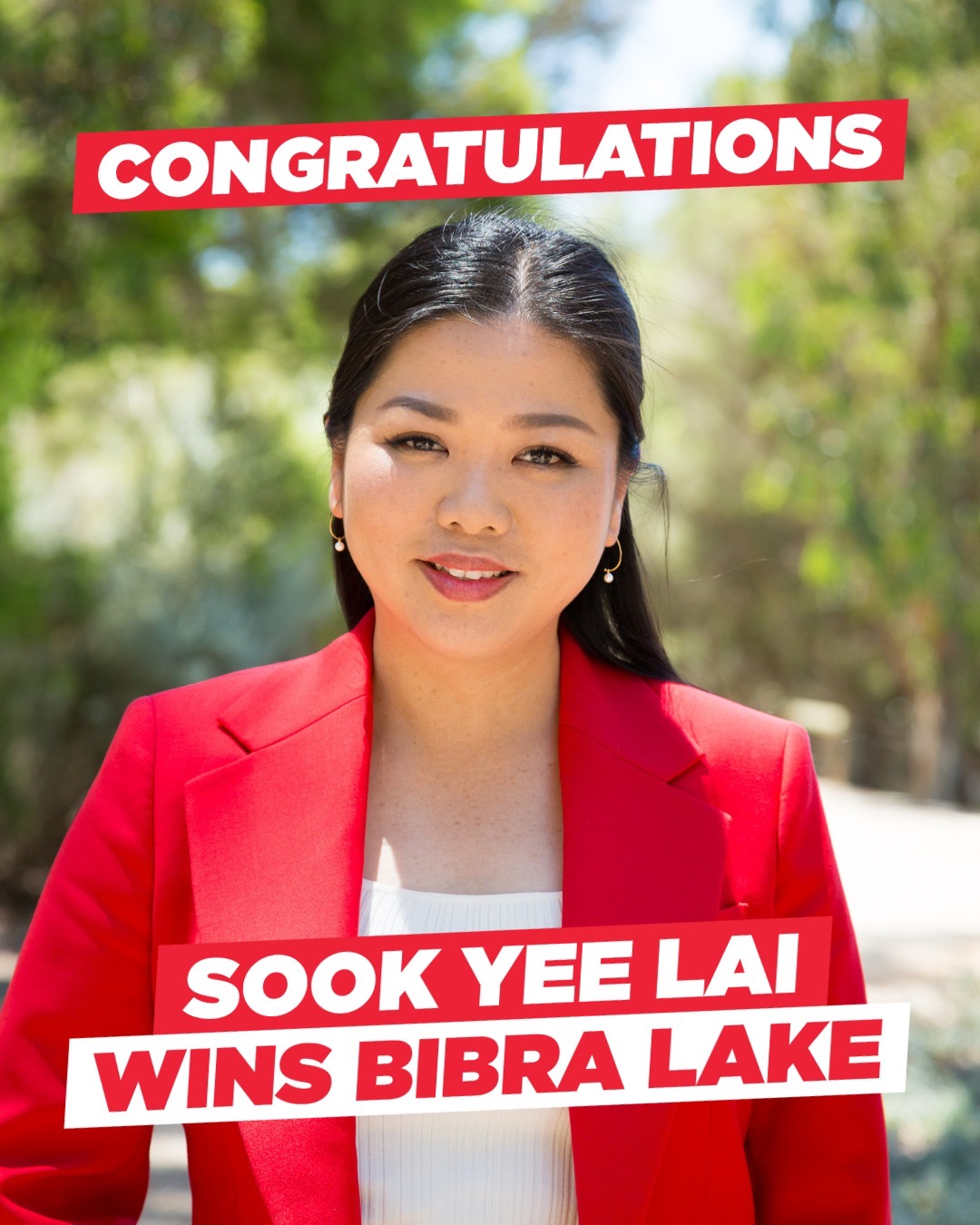
Congratulations to Sook Yee Lai (黎淑仪) on her historic election as the Member for Bibra Lake in the Western Australia Parliament! She is believed to be the first MP of Chinese heritage elected to the lower house of the WA Parliament.
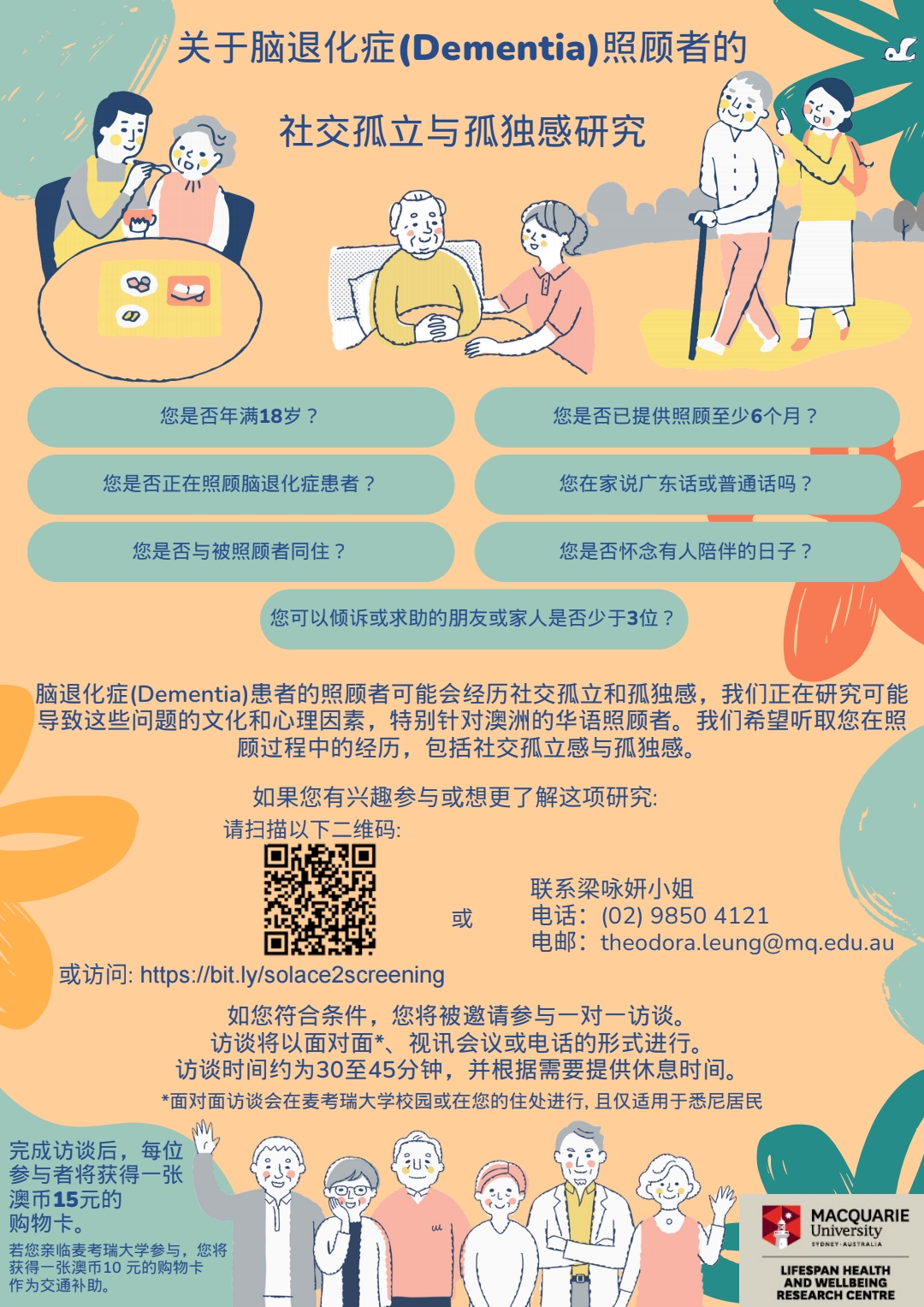
Macquarie University Researchers Seeking Assistance from Chinese-speaking Caregivers of People with Dementia
The SOLACE (Social Isolation, Loneliness, and Cultural Experiences) Project
Researchers at Macquarie University are currently exploring the cultural and psychological factors that may cause and maintain social isolation and loneliness among Chinese-speaking caregivers of people with dementia in Australia. We would like to invite Mandarin- or Cantonese-speaking caregivers aged 18 years and over, live with the person with dementia, have provided care for at least six months, with feeling of socially isolated and/or lonely to participate in a one-on-one interview and sharing their experiences of social isolation, loneliness and being a caregiver. Your research participation benefits the community by helping us to understand social isolation and loneliness in Chinese-speaking caregivers of people with dementia and inform the development of support and/or treatments for this group.
Join us in learning how Australian democracy works, how to participate in Australia’s democratic process and how to identify misinformation and disinformation.
Co-organised by CCCAV (The Chinese Community Council of Australia, Victoria Chapter) and CPCA (Chinese Professionals Club of Australia).
This workshop is a Chinese Australian Forum CAF initiative, supported by the Australian Government’s National Foundation for Australia-China Relations.
Presented by Dr Eric Fu (Senior Research Fellow – Civics and Citizenship Education, Youth Social and Political Participation) from the University of Melbourne.
Workshop will be filmed. You have the option to indicate should you not wish to be filmed within the booking form.
Venue: Clayton Community Centre – Theatre. 9-15 Cooke Street, Clayton, Victoria 3168.
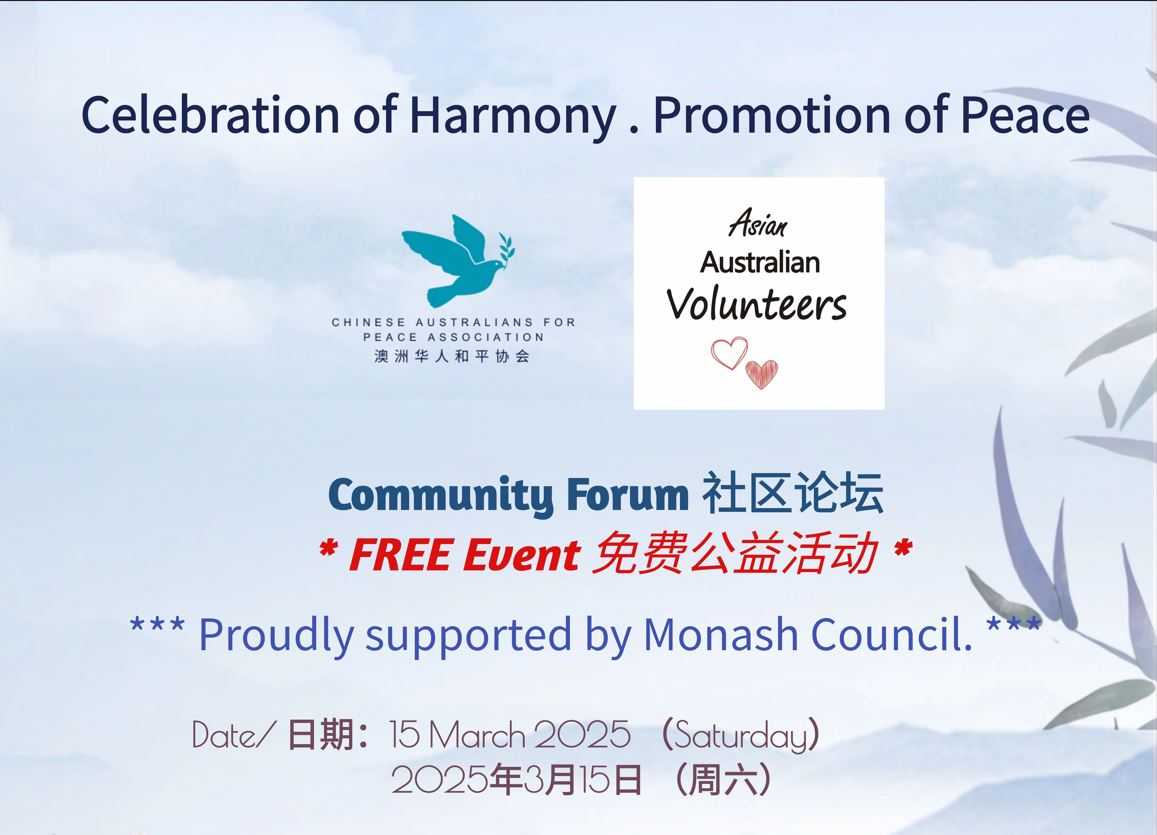
Theme: As we commemorate the 80th anniversary of the end of World War II across the Asia-Pacific, Europe, and beyond, this milestone provides a poignant opportunity to reflect on the devastating experiences of the war—widespread destruction, immense loss of life, and profound human suffering—and the lessons we should learn to prevent future conflicts, promote peace, and strengthen understanding and social cohesion in today’s multicultural societies.
Keynote speakers:
Professor Yuki Tanaka (田中利幸教授)
Yuki Tanaka was a research professor at the Hiroshima Peace Institute, Hiroshima City University, until his retirement in 2015. He was a visiting professor at Birkbeck College, University of London, UK, and the Sir Ninian Stephen Visiting Scholar at the Law School, University of Melbourne, Australia. His publications include 《Entwined Atrocities: New Insights into the U.S.- Japan Alliance (2023)》; 《Hidden Horrors: Japanese War Crimes in World War II (second edition 2018)》; 《Japan’s Comfort Women: Sexual Slavery and Prostitution During World War II and the US Occupation (2002)》; and the co-edited collection 《Beyond Victor’s Justice? The Tokyo War Crimes Trial Revisited (2011)》. He has also published many books in Japanese. He lives in Melbourne and works as a freelance historian.
Dr Jun (Eric) Fu (付俊博士)
Dr Jun (Eric) Fu is a Senior Research Fellow at the Youth Research Centre, Faculty of Education, University of Melbourne. He has been doing citizenship education and research for more than ten years. His research interests include digital media, citizenship practices of young people, and media and digital literacy education. He has published in journals and edited book collections in the field of youth studies and citizenship education.
Taewoo Kim
“I’m Taewoo Kim, the president of Friends of Comfort Women in Melbourne (FCWM). Since taking on this role, I’ve worked with our group to build stronger connections with other non-governmental organizations. We’ve set up stalls at events like the Korean Festival in Melbourne, where we raise awareness about the peace statue and highlight the war crimes committed against women. My goal is to continue the legacy of the “Halmeonies” by collaborating with groups like CAPA to keep pushing for justice and remembrance.”
Christine Kim
Christine Kim is the secretary of Friends of “Comfort Women” in Melbourne (FCWM) and has been actively participating in the justice movement since 2017. Outside of her volunteering, Christine works for Monash University as an in-house lawyer.