Women With Disabilities Australia (WWDA): The Leadership and Mentoring Toolkit Now Available
Women With Disabilities Australia (WWDA) has launched the WWDA LEAD (Lead, Engage, Activate, Drive) Leadership and Mentoring Toolkit, designed specifically for women and gender-diverse people with disabilities. This free resource aims to empower users by providing tips, ideas, and strategies to make a positive impact in their communities. The toolkit emphasizes the importance of inclusive leadership and the principle of “Nothing about us without us,” encouraging users to challenge societal norms and advocate for accessibility and equality. By exploring this toolkit, individuals can embark on their leadership journey and contribute to a more inclusive world.
Chinese-Australian Community Reflects on Advocacy for First Nations Voice to Parliament
17 October 2024
Yue Hu, a member of the Chinese Community Council of Australia, Victoria Chapter (CCCAV), took the stage at the Federation of Ethnic Communities’ Councils of Australia (FECCA) Conference 2024, delivering a compelling presentation titled “Chinese-Australian community support for the First Nations Voice to Parliament”. The conference, themed “Our Experiences. Our Future”, was held at the Brisbane Convention and Exhibition Centre on October 16-17, bringing together community leaders, organizations, service providers, researchers, policymakers, and public servants to share ideas and experiences on multiculturalism. Additionally, Yue Hu was interviewed by SBS during the conference, further highlighting the importance of community engagement and multicultural dialogue.
Yue Hu’s talk underscored the important role that multicultural communities play in supporting the First Nations Voice to Parliament. By sharing insights and examples from within the Chinese-Australian community, Hu reflected on the journey of Chinese-Australian community in advocating for the First Nations Voice.
The Voice Referendum has illuminated a significant gap in knowledge and understanding about First Nations communities among multicultural communities in Australia. This gap has hindered support for the First Nations Voice to Parliament and created challenges for broader Reconciliation efforts.
Drawing on the ethnographic experiences of volunteer advocates, this presentation focuses on the Chinese-Australian community’s efforts to bridge the information gap. Challenges such as community engagement, language barriers, and the spread of misinformation were identified as key factors that hindered the understanding of First Nations’ experiences. Education and clear communication became essential to overcoming misinformation and language barriers.
A campaign led by the Chinese Community Council of Australia – Victoria Chapter, the RMIT Chinese-Australian Studies Forum, and the Chinese Australians for Social Causes Network was instrumental in raising awareness. This campaign employed a variety of outreach methods, including:
Media releases
Online surveys
Webinars
Social media posts
Short video productions
Face-to-face events
Collaborations with community organisations
Engagement at voting stations
This diverse approach allowed the campaign to reach different segments of the Chinese-Australian community, providing clear and accurate information about the Voice to Parliament and encouraging informed voting.
The efforts of Chinese-Australian volunteers culminated in a shift in support for the Yes campaign, particularly in electorates with a large Chinese-Australian population, such as Reid and Chisholm. Both regions voted in favour of the Voice campaign, above the national average, demonstrating the effectiveness of focused education and engagement.
“This result shows the power of community-led advocacy,” said Jimmy Li of the CCCAV. “When communities are well-informed and engaged, they can become strong allies in supporting First Nations representation and reconciliation.”
The presentation concludes with key recommendations for continuing advocacy in multicultural communities:
Increase Educational Efforts: Promoting education about Indigenous history and culture within multicultural communities is essential to foster understanding and solidarity.
Strengthen Community Engagement: Regular events and discussions should be held to provide insights and encourage support for First Nations’ initiatives.
Sustain Advocacy: Ongoing dialogue about Indigenous reconciliation and social justice must be maintained to ensure that the momentum of support continues.
Affiliations of the authors of the presentation:
Jimmy Li – Chinese Community Council of Australia, Victoria Chapter (CCCAV)
Jing Qi – RMIT Chinese-Australian Studies Forum
Yue Hu – Northern Health, Melbourne
Eric Fu – Faculty of Education, University of Melbourne
First Civics Education Workshop for Chinese Australians in Victoria Successfully Held
维州华人社区首次公民教育大型讲座成功举行
The inaugural Civics Education Workshop held at Kew Golf Club on 29 September 2024 was a huge success, attracting around 130 participants. This groundbreaking initiative, co-organized by the Chinese Community Council of Australia, Victoria Chapter (CCCAV) and the Australian Asian Business Women’s Association (AABWA), aimed to empower Chinese Australians to participate actively in the democratic process.
Participants showed tremendous interest in the workshop, gaining a comprehensive understanding of Australian democracy’s inner workings. They learned effective ways to engage with the democratic process, fostering a sense of civic responsibility. Notably, one of the workshop’s key focuses – identifying misinformation and disinformation – resonated strongly with attendees, equipping them with essential tools to navigate the complex digital landscape in their civics and citizenship activities.
Dr. Eric Fu, a Senior Research Fellow from the University of Melbourne, led the workshop, sharing his expertise in Civics and Citizenship Education. The event was supported by the Chinese Australian Forum (CAF) and the Australian Government’s National Foundation for Australia-China Relations, demonstrating a collaborative effort to promote civic engagement among Chinese Australians.
This workshop marks a significant step towards fostering a more informed and active Chinese Australian community in Victoria. By raising awareness and empowering individuals with knowledge and skills, we can build a more vibrant and inclusive democracy.
Have Your Say: Victoria’s Container Deposit Scheme
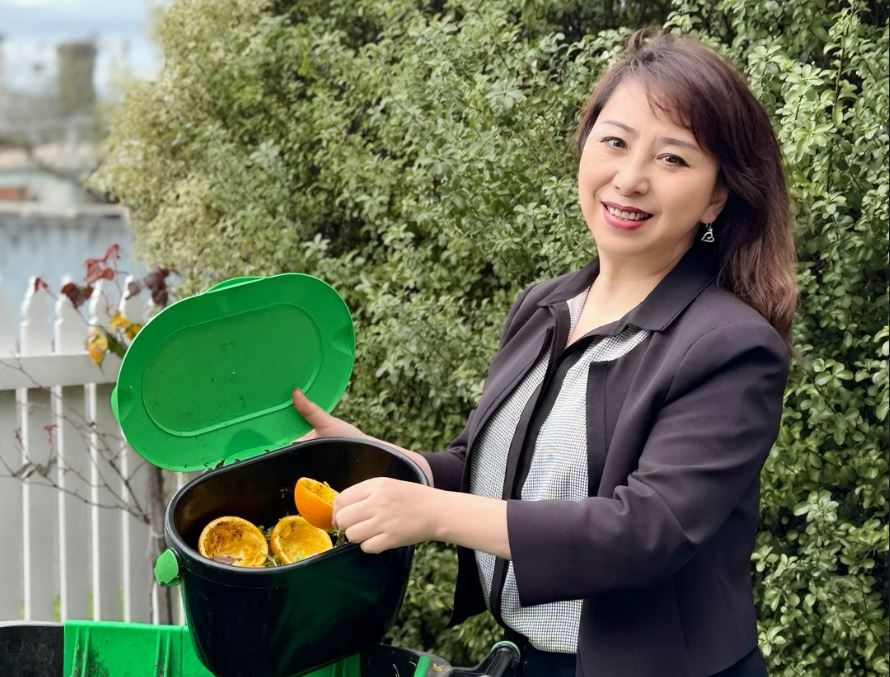
You are invited to complete a short survey to improve Victoria’s Container Deposit Scheme (CDS Vic): http://bit.ly/CDSVic_survey. Respondents will have a chance to win one of four $100 gift cards.
请在问卷开头部分选择:Chinese Community Council of Australia (CCCA Vic)
We’d love to hear your thoughts on how we can improve recycling across Victoria!
As part of Victoria’s Container Deposit Scheme (CDS Vic) efforts to improve services, we’re inviting you to take part in a short survey to help make CDS Vic better and more accessible for all, including those in the Chinese community.
By completing the survey, respondents will not only have a chance to win one of four $100 gift cards, but they’ll also play a part in helping Victoria reduce waste and create a cleaner, greener state.
This survey is available in 5 languages, including English and Simplified Chinese.
Please click on the name of the organisation at the beginning of the survey: Chinese Community Council of Australia (CCCA Vic)
Join us to learn how Australian democracy works, how to participate in the democratic process and how to identify misinformation and disinformation.
Co-organised by AABWA and CCCAV (The Chinese Community Council of Australia, Victoria Chapter).
Supported by CAF (Chinese Australia Forum), the Australian Government’s National Foundation for Australia-China Relations.
Presented by Dr Eric Fu (Senior Research Fellow – Civics and Citizenship Education, Youth Social and Political Participation) from the University of Melbourne.
Upcoming Seminar to Commemorate Life & Legacy of Iris Chang: 20th Anniversary
纪念张纯如女士逝世20周年座谈会
Join us for a tribute seminar honouring the life and legacy of Iris Chang (1968-2004) on the 20th anniversary of her passing. We will commemorate her inspiring courage, groundbreaking work and lasting impact on our world.
Organised by: The Chinese Australians for Peace Association Inc (CAPA)
Congratulations to 2024 Australian Museum Eureka Prizes Winners and Finalists with Chinese Heritage
祝贺2024澳大利亚博物馆尤里卡奖的华裔获奖者和入围者
The Australian Museum Eureka Prizes are the country’s most comprehensive national science awards, honouring excellence across the areas of research & innovation, leadership, science engagement, and school science.