
Connecting Memories Through Art: Melbourne Communities Come Together for Remembrance and Peace
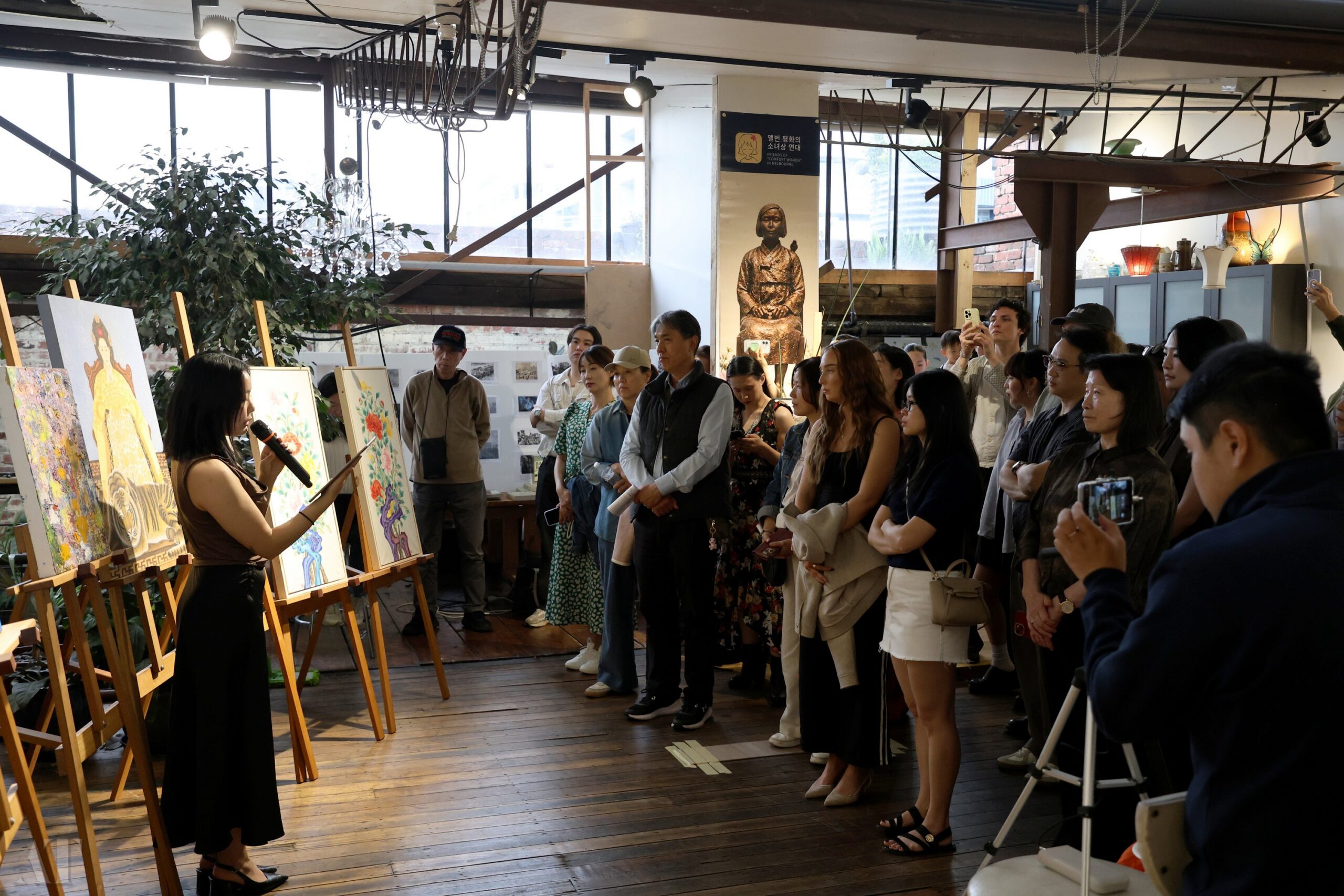
More than 120 people from diverse communities and cultural backgrounds across Melbourne came together on Saturday, 19 September 2026 for Connecting Memories Through Art, an exhibition dedicated to remembrance, human dignity, understanding and peace.
The event brought together community members, artists and people from diverse backgrounds, creating a space for reflection, dialogue and greater understanding. Through art, storytelling, music and the Chinese Statue of Peace, participants were invited to reflect on difficult chapters of history, share experiences and perspectives, and build connections across communities.
The exhibition was jointly organised by the Chinese Australians for Peace Association and the Friends of “Comfort Women” in Melbourne. At its centre stood the Chinese Statue of Peace, displayed alongside artworks featured in the exhibition. The statue carries the memory of victims of wartime suffering while representing a shared aspiration for dignity, justice, peace and hope.
The afternoon began with guests viewing the exhibition, followed by the official programme at 4:30 pm. The programme was warmly and ably hosted by Christine Kim, who guided the audience through the afternoon’s speeches, presentations, performances and award announcements.
In his opening remarks, Jimmy Li reflected on the relationship between history and memory, noting that while history tells us what happened, memory reminds us why it still matters. He described Connecting Memories Through Art as more than an exhibition. It was an invitation to reflect, to listen and to better understand the experiences of others. Art, he said, can often express what words cannot, helping people across different cultural and linguistic backgrounds connect through shared human experiences.
A particularly moving part of the programme was a presentation by Georgina Banks, who shared the story of the Bangka Island Massacre and spoke about her book Back to Bangka. On 16 February 1942, 21 Australian Army nurses were killed by Japanese troops on Radji Beach, Bangka Island, after surviving the sinking of the SS Vyner Brooke, a passenger and cargo steamship evacuating people from Singapore. Vivian Bullwinkel was the only one of the 22 nurses to survive the massacre. Georgina’s contribution added another dimension to the exhibition’s exploration of wartime experiences, resilience and remembrance.
Participating artists also introduced their artworks and shared the stories, experiences and ideas behind them. Their personal reflections were particularly touching, giving visitors an opportunity to understand the artworks not simply as pieces on display, but as deeply personal expressions of memory, dignity, human rights, peace and hope.
Artists from different cultural backgrounds were invited to respond to themes including memory, dignity, human rights, peace and solidarity. The selected competition entries were displayed alongside the Chinese Statue of Peace, bringing people with different experiences and cultural backgrounds together in the same space to meet, listen and exchange perspectives.
In addition to the competition entries, the exhibition featured works by Carol Ruff and Alisa Tanaka. Ruff’s Landscape of a Lost Childhood, a series of three paintings, reflects on a return journey to Java with her mother, Jan Ruff O’Herne, and memories of a young life profoundly affected by war. Tanaka’s The Bird Girls offered a visual response to women killed by acts of violence in Australia, bringing another perspective on memory, human experience and contemporary social issues to the exhibition.
Music brought another dimension to the afternoon. Baeyi Kim performed on the gayageum, a traditional Korean instrument, while Stephanie Chen gave a flute performance. Together with the artworks, storytelling and personal reflections, the performances highlighted the many ways in which art can communicate feelings and memories that may be difficult to convey through words alone.
Winners of the Connecting Memories Through Art art competition were announced during the official programme. Following the formal close, guests continued to view the exhibition, meet the artists and engage in conversations with other participants.
The issue of wartime “comfort women” has long attracted public attention and, at times, political controversy. At its heart, however, it concerns human dignity and fundamental rights. Remembering this history is about respecting survivors and victims while encouraging continued reflection on the relationship between history, justice and peace. By approaching difficult historical subjects through art, the exhibition sought to make them more accessible and create opportunities for reflection, dialogue and understanding.
Organisers hope that Connecting Memories Through Art will be more than a single exhibition and will contribute to an ongoing conversation between communities about historical memory, human rights and peace. They also hope to build broader community understanding and support for finding a permanent home for the Chinese Statue of Peace.
Jimmy Li expressed the hope that Melbourne, as one of the world’s most multicultural cities, could be a place where a monument dedicated to peace, human dignity and historical understanding finds a permanent home.
Ultimately, the exhibition carried a simple but important message: remembering history is not about perpetuating hatred or pain. It is about learning from the past, building connections through understanding, safeguarding peace through shared memory, and helping to build a better and more peaceful future with compassion, inclusion and mutual respect.


